
netsuite-articles
NetSuite articles
Enhancing Tax Functionality in NetSuite with the SuiteTax Engine
SuiteTax is a tax management engine within NetSuite that helps businesses to calculate tax to ensure compliance with tax laws & regulations.


netsuite-articles
Summarise the article with your AI:



In NetSuite, custom General Ledger (G/L) lines are used to enhance and customize the accounting entries generated by the system's standard processes.When posting transactions to the General Ledger, such as Item Shipments or Receipts, Invoices or Vendor Bills, Assembly Builds, Inventory Adjustments etc., NetSuite generates accounting impacts on accounts that are pre-defined, a.o. on Items and/or Customers and/or Vendors. These preconfigured postings are not always the desired ones for businesses that have to meet specific accounting standards, special regulatory or tax requirements, or business practices that are not addressed by NetSuite's default settings. The Custom GL Plug-in feature offers the possibility to customize those standard accounting impacts according to your company’s individual accounting needs.
In order to use the Custom GL Plug-in option, you need to activate 2 features. Go to Setup > Company > Enable Features. Then, on the SuiteCloud subtab, enable the following features: Server Suite Script and Custom GL Lines.

In this example, we need Custom GL Plug-ins on 3 types of transactions: item receipts, assembly builds and vendor bills. The standard GL impacts were not matching with the specific requirements of our NetSuite customer. Therefore, we have created specific GL impacts by means of the Custom GL Plug-in feature.
The calculations to be made by the Custom GL Plug-in are the following:
As an additional condition, the plug-in needed to only run on the item receipts that are not created from a transfer order. Here is an example of the final GL impacts on an item receipt recorded against a purchase order for the “bulk powder” item. Note that amounts are strictly hypothetical. The two last lines are calculated by a Custom GL Plug-in. This Custom GL Plugin leaves the standard G/L posting intact, but adds additional lines to make the end result compliant with the accounting standards as desired by our customer.
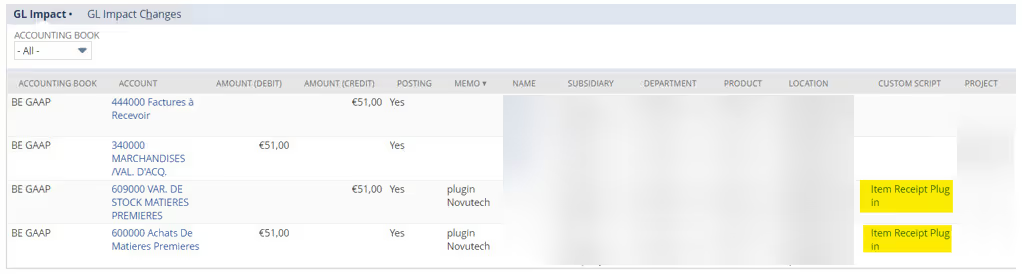
Note: amounts are hypothetical
The calculations made by this particular Custom GL Plug-in are the following:
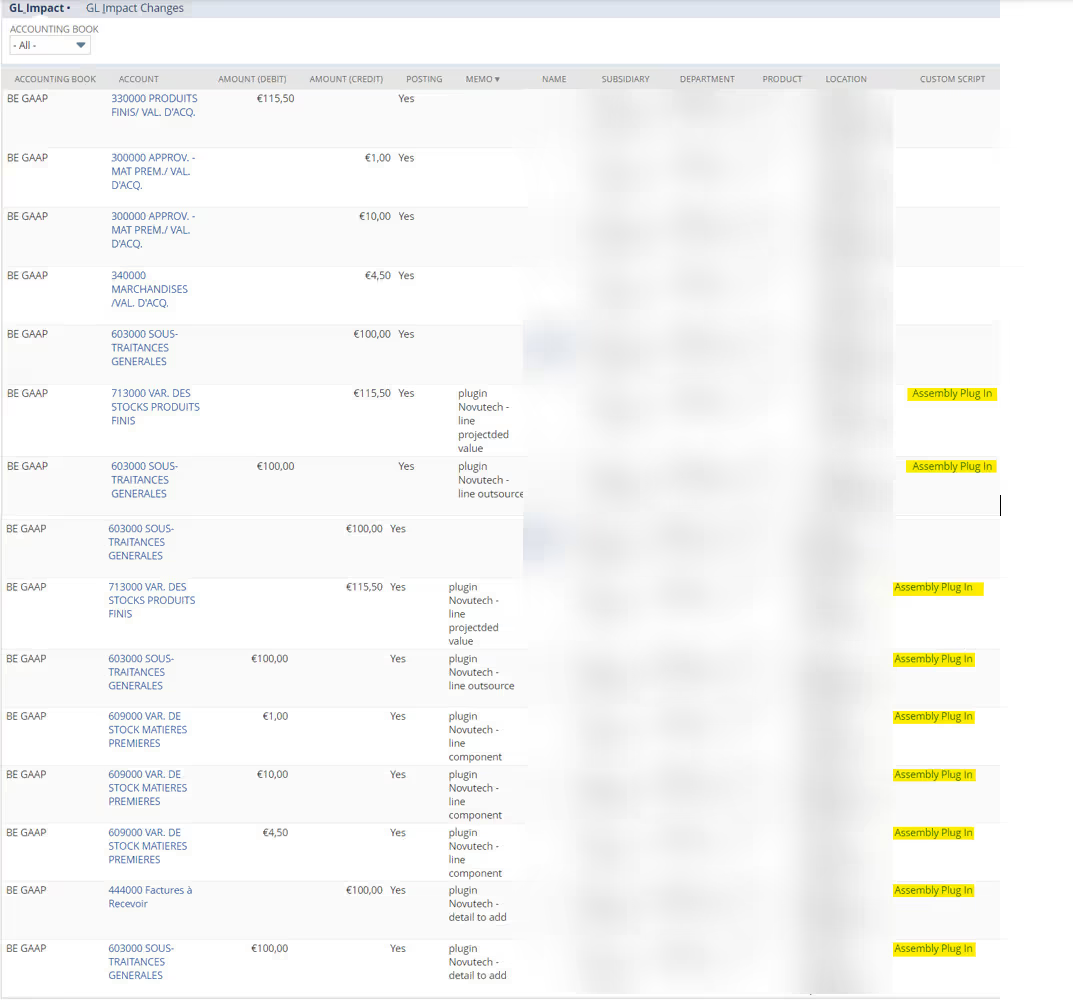
Note: amounts are hypothetical
The calculations made by this last Custom GL Plug-in on Vendor Bills are the following:
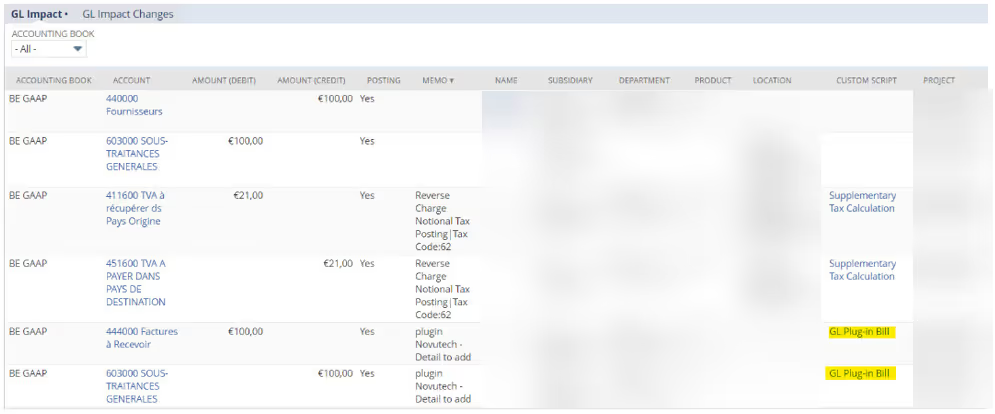
Note: amounts are hypothetical
Custom GL Plug-in customizes accounting entries generated by NetSuite's standard processes for transactions like item receipts, invoices, vendor bills, and assembly builds. It addresses specific accounting standards, regulatory requirements, or business practices not covered by NetSuite's default settings. The feature adds custom GL lines while leaving standard postings intact, ensuring compliance with unique accounting needs.
Enable two features in Setup > Company > Enable Features under SuiteCloud subtab: Server SuiteScript and Custom GL Lines. These prerequisites unlock the Custom GL Plug-in capability allowing SuiteScript-based customization of general ledger impacts. Without both features enabled, custom GL line functionality remains unavailable regardless of role permissions.
Item receipts can route expenses to custom purchase accounts instead of standard expense accounts. Assembly builds can split costs between raw materials COGS, manufacturing charges, and work-in-progress accounts with complex multi-line logic. Vendor bills can reclassify manufacturing charges across specific accounts. Each scenario uses quantity times rate calculations or static values based on business rules.
Custom GL Plug-in supplements standard entries by adding additional lines rather than replacing existing ones. Standard NetSuite postings remain intact while plug-in adds custom debit and credit lines to achieve desired final GL impact. This approach maintains system integrity and audit trail while meeting specialized accounting requirements not addressed by configuration alone.
Use Custom GL Plug-in when standard account configurations on items, customers, and vendors cannot achieve required GL impacts. Typical scenarios include complex Belgian or European GAAP requirements, manufacturing cost allocation across multiple COGS accounts, conditional GL logic based on transaction source, and regulatory compliance requiring specific account structures. Always explore configuration options before developing custom plug-ins.
Let's discuss how we can help you move from complexity to clarity.